CHRISTMAS CANDLE
 |
| NAKED FLAME |
To 30 Dec
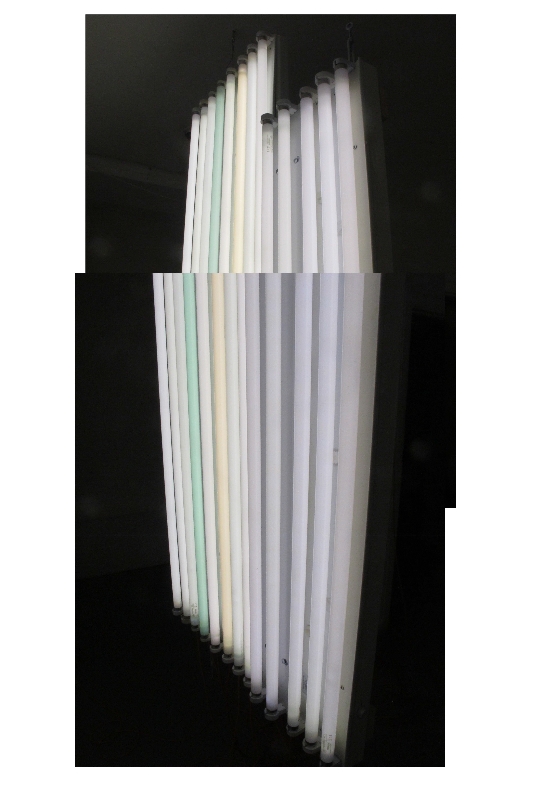
The arch-mischievous Giorgio Sadotti has brought darkness to the evening front of studio1.1: the plug sockets trail leads, but all you can see by is a flame flickering from the floor. Sadotti has – perhaps in a parody of nostalgia for yuletides past? – reinstated a demolished dividing wall, the better to hide what the leads lead to: the electric lights which normally light the gallery have been moved, simply by extending the electrical wires which normally power them, to form a battery aimed at the wall of the newly recreated back room. Thus is the true light of the season hidden and – apart from lighting a magazine work featuring Amy Winehouse (and maybe that’s a big ‘apart from’) – wasted…
 |
| FLO FLOW |
CARDS AT CHRISTMAS


Screening on 10 Dec as part of ‘QUEERING TRADITIONS: an evening of performances, screening and discussion’ at St George’s Tavern, 373 Commercial Rd, London E1- and viewable online at

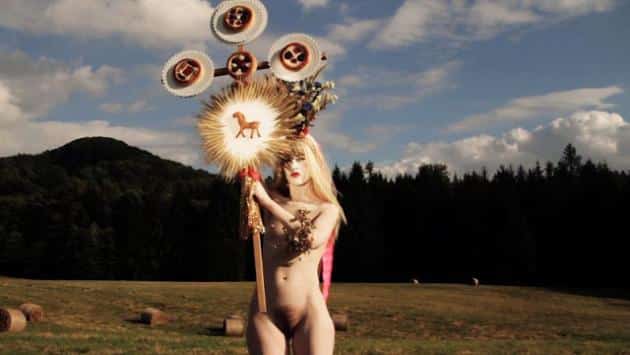
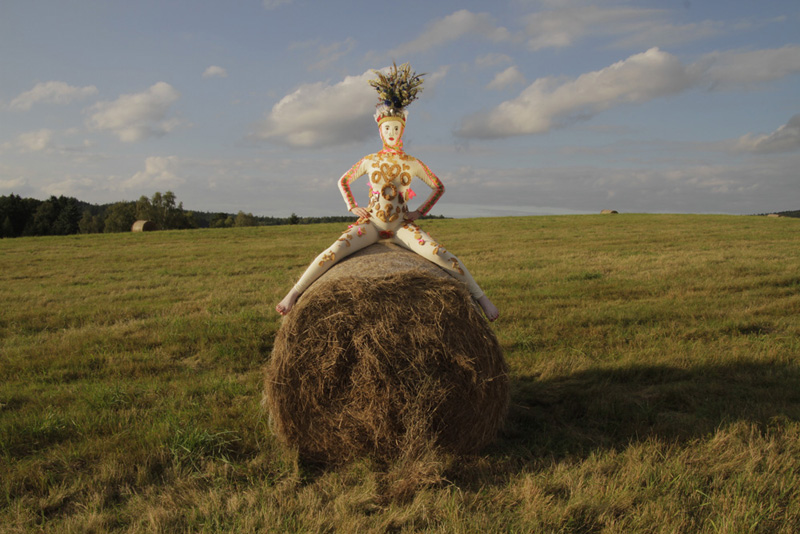
The central action is the baking of shaped breads which are placed on the naked, supine body of the striking Zoë Simon – a frequent collaborator of Buskova, who works in an inclusive manner to bring together the contributions of performers, composer and fellow-artists. The baked woman is carried on the shoulders of the baking women, echoing a funeral procession just as her body, once she is laid down, could be a corpse. Yet the film is uplifting, not dark. Typically of Buskova, it contains striking images apart from that main ceremonial stream, notably a figure dressed entirely in the paradoxical combination of flowers and boxing gloves (made by Matthew Cowan), and a concluding passage in which the theme of shaped bread on the body becomes the basis for an all-over suit, in which the dead woman appears to rise again and present a village woman with risen bread.
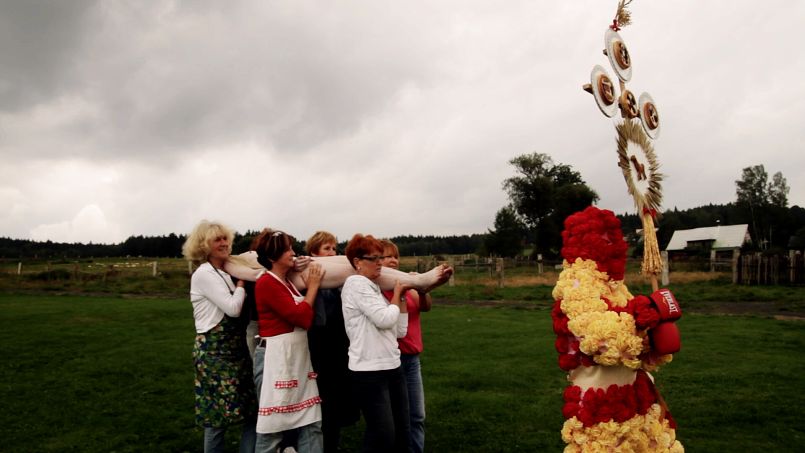
Buskova’s earlier films assert the resilience of local cultures – these rituals have seen off communism – and ask two interesting questions. First, what role should traditions play in the modern world? Best, Buskova implies, not to let them ossify in conservation, but to change them to suit the present. Second, what is the boundary between life and art? The melding of the two shows that the division is not such a simple one, and speaks for the art of living.
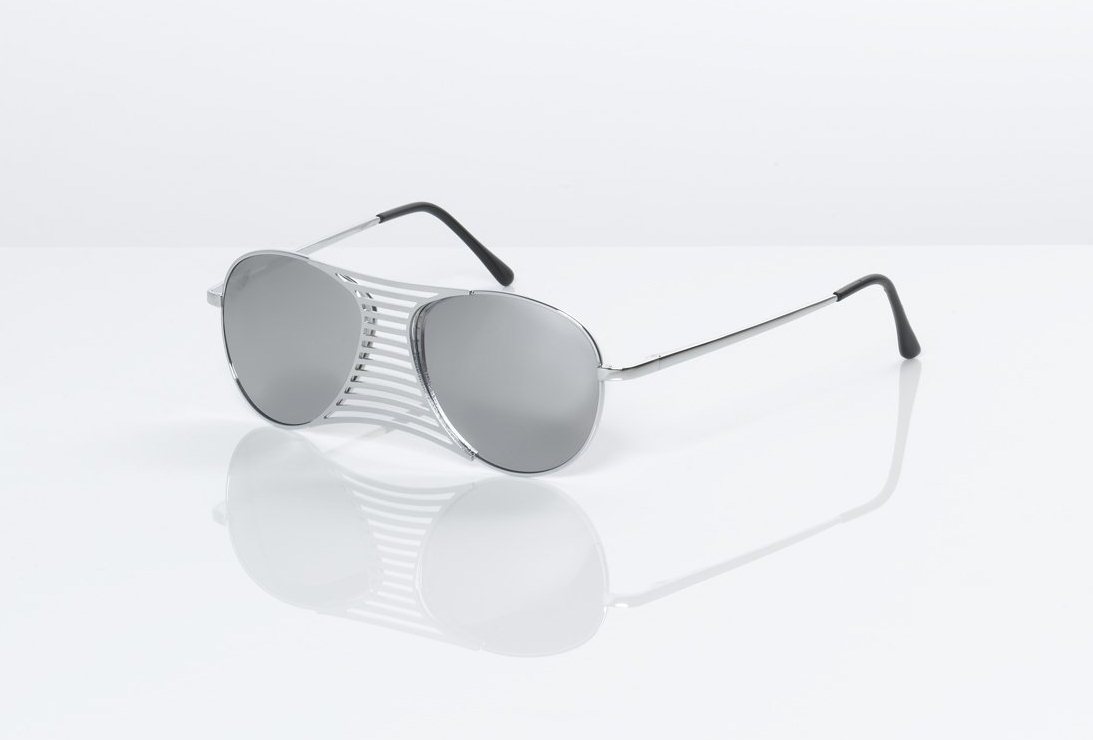 |
| Incorrectly manufactured object, designed and fabricated by factory worker Mr King at Wenzhou Yidao Optical Co., Ltd., Wenzhou, China. 2012. Photo Jonathan Minster |
To 21 Dec – http://www.erratum.co is a website complete with associated campaign
Jeremy Hutchison spent five years writing adverts for Coca-Cola, so this luxury shop spotlighting a few select goods speaks the language of sales fluently, including diagrams to link what we see to the theory. But things are not what they seem: the cabinets are versions of Haim Steinbach’s iconic means of presenting readymade items, an art tradition which Hutchison tweaks sharply, as the items are made at his request to be deliberately dysfunctional. The cheese graters have no holes; tennis racquets are double-headed; a violin has bow hair for strings, leaving one to suppose that a stringed bow will be designed to play it; and the sunglasses only look like a plausible design until you wonder how you’d wear them. On the other hand, hanging slatted rubber-curtain-like sculptures which might fit into several artists’ practices really are dividers from the factory floor through which forklift trucks more often push.
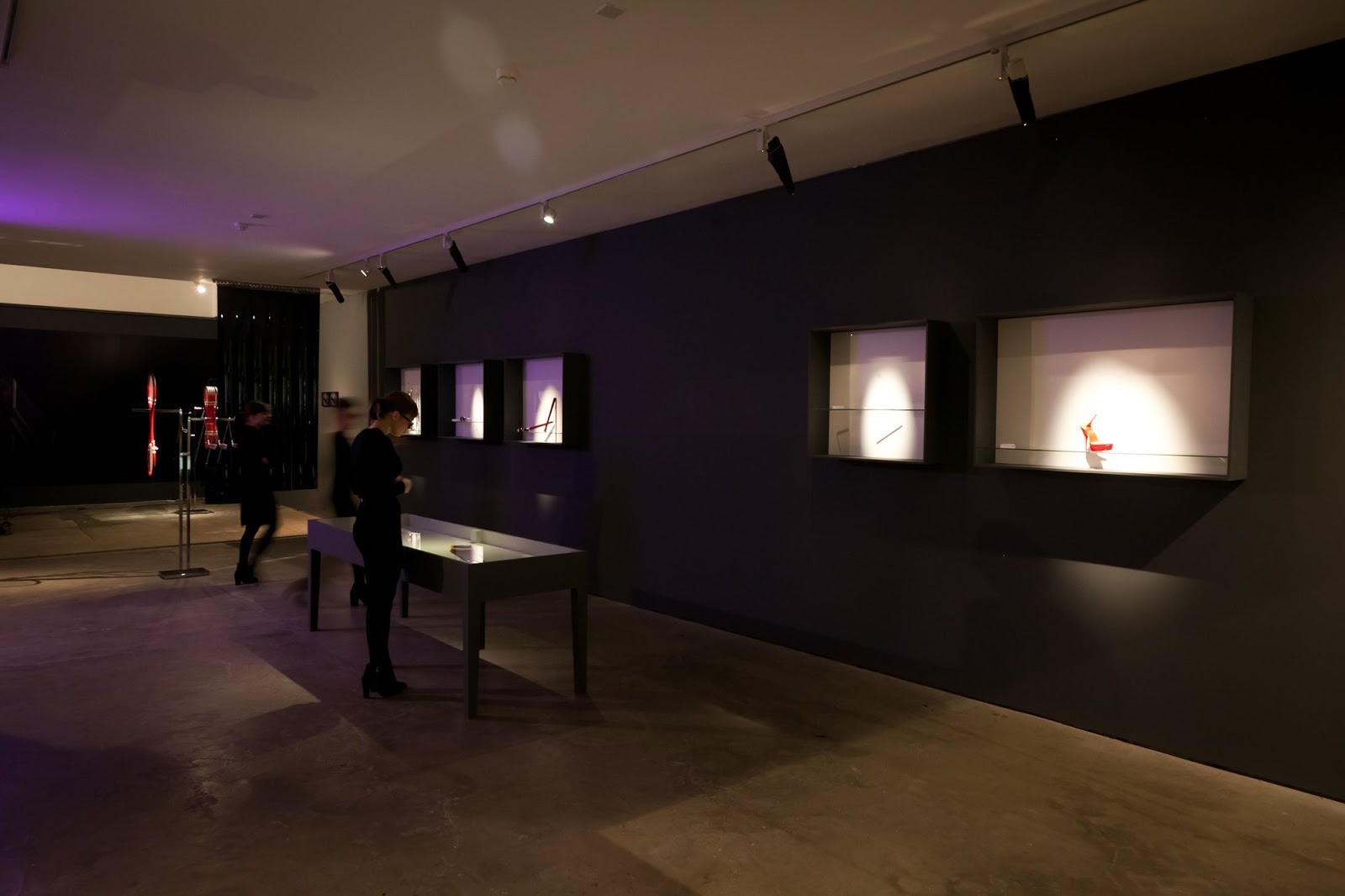 |
| Installation view |
I wonder if London gets too complacent about having the Tate – commonly reckoned to lie behind the boom as a result of which there’s so much else to see (though not so much that’s open at Christmas). So here’s an appreciation of some of what’s there now, when many other galleries are closed…
 |
| Daido Moriyama – from ‘Another Country in New York’ |
William Klein + Daido Moriyama – Tate Modern
These effectively contrasted yet linked shows give us Daido Moriyama (born Osaka, 1938) as the dark, war-clouded mirror of American culture in Japan, and in particular of Paris-based American William Klein (born New York, 1928). Both are best known for collections of black and white photographs of cities – but where Klein is extrovert, exuberant, humane, Moriyama is introvert, alienated, nihilistic – and pushes further to explore the formal limits of the photograph as an analogue for troubled states of mind and culture. Even his cherry blossom looks beautifully disturbed.
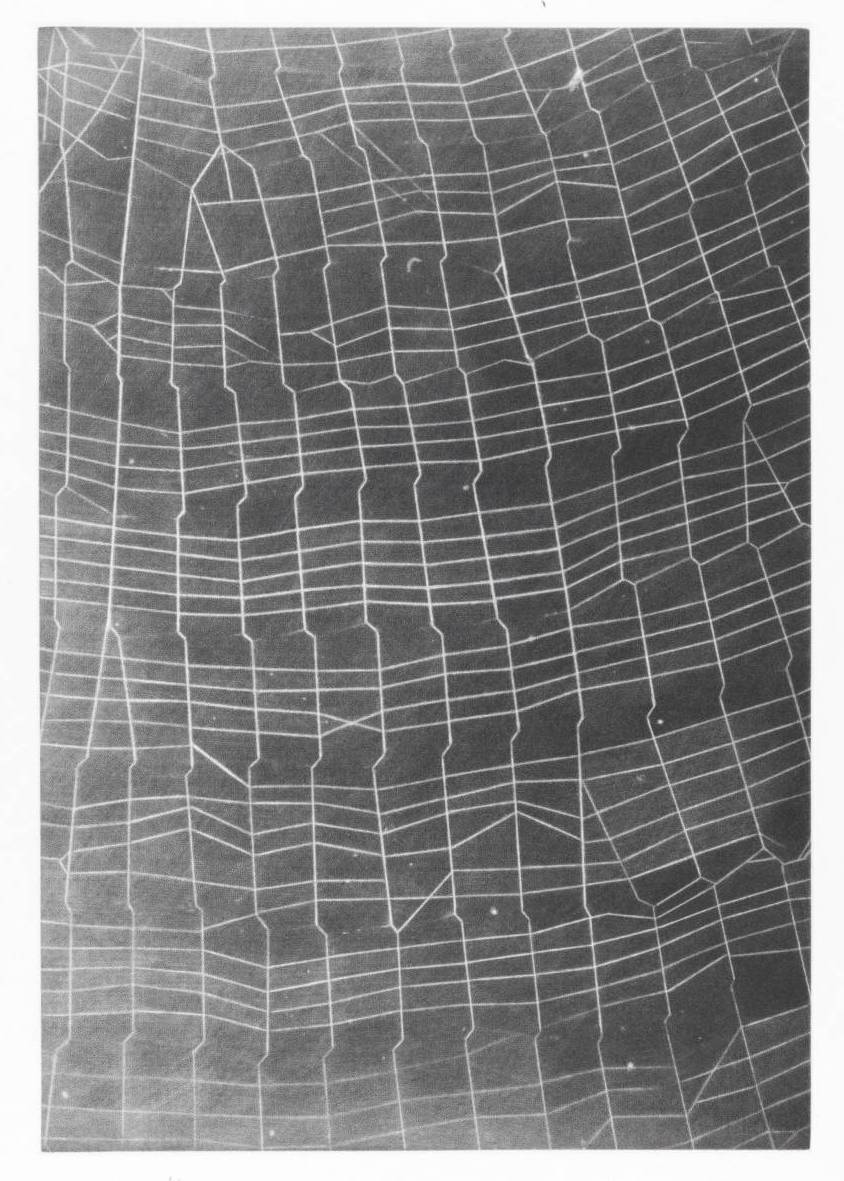 |
| Web Ladder, 2010 |
Vija Celmins & Celmins selects Turner – Tate Britain
To April
You could easily visit Tate Britain and miss perhaps its best current display. At the far end of the Clore Galleries, maximum distance from the Pre-Raphaelites and the Turner Prize, you’ll find two rooms: one of Via Celmins’ exactingly resonant universes expanded and contracted in stars, seas and webs (including the recent variants of shooting stars and ladder webs); and one with her choice of the most minimalist of late Turner sketches. The pairing contrasts the density of charcoal and mezzotint with the airiness of watercolour, and deeply meditated end products with sheets Turner himself would have dismissed – but both revel in their materials.
 |
| Installation view of Jutta Koether room |
Jutta Koether in ‘A Bigger Splash’ – Tate Modern
To 1 April
An eccentric show, yoking all sorts of stuff together at some remove from its apparent theme of performance through painting… but no matter: I was pleased to come across two rooms in which paintings interact with their surrounding spaces and people. Jutta Koether, once in Martin Kippenberger’s circle, takes forward his seriously unserious approach to painting through an all-over jungle of sketchy explorations, seen here in a large centrally-suspended work which becomes the subject of a sort of viewers’ diary which tuns into the reason for the painting. There are also ‘Wild Garlands’: deliciously glossy-dark plank-fetishes which become the unlikely props in a dance collaboration with Ei Arakawa. That then bleeds into a room of Ei’s winningly sociable, cheerfully ritualistic performances with other painters’ works.
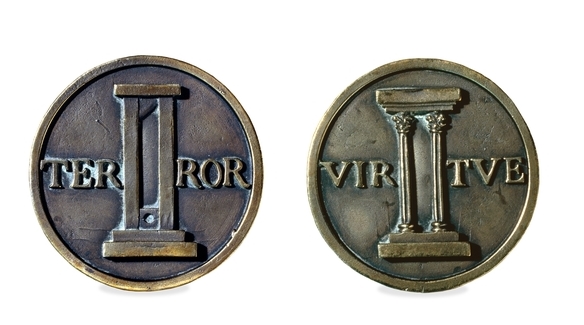 |
| Terror. Virtue – bronze medal, 1984 |
Ian Hamilton Finlay – Tate Britain
To 17 Feb
I don’t much care for the installation of Ian Hamilton Finlay (1925-2006) in the Duveen Gallery, but there’s no doubting his posthumous influence, and the work shown gives a good sample of how language and history directly inhabits his world. It includes plenty of pointed ‘visual rhymes’ such the flute / machine gun, fountain / warship and grove / tank – as well as this rhyme between classical columns and guillotine. The ‘terror’ of state oppression relates specifically to the actions of Strathclyde Council in the ‘First Battle of Little Sparta’, fought over a refusal to treat Hamilton’s garden as non-commercial for rating purposes.
CHRISTMAS TRIP
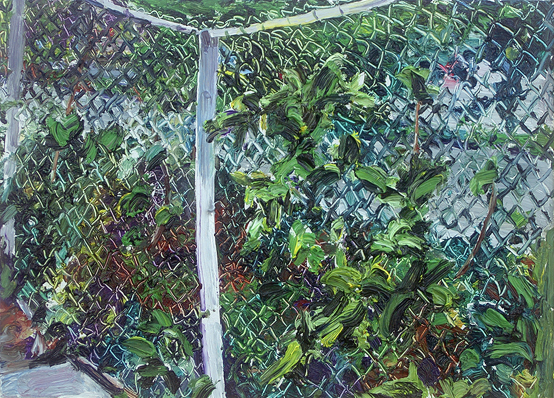 |
| Jaring Lokhorst: Lush |
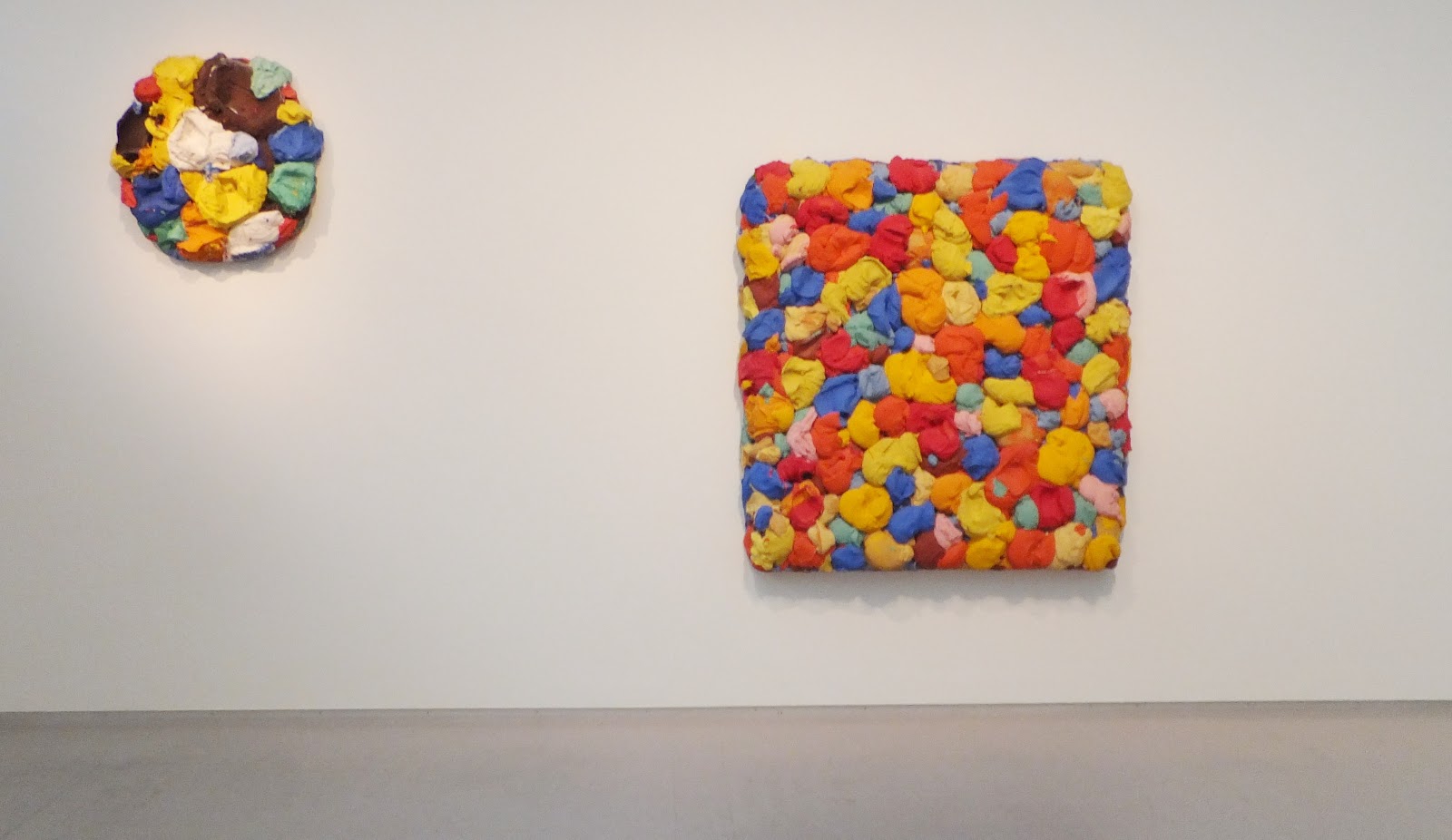 |
| Bram Bogart installation view |
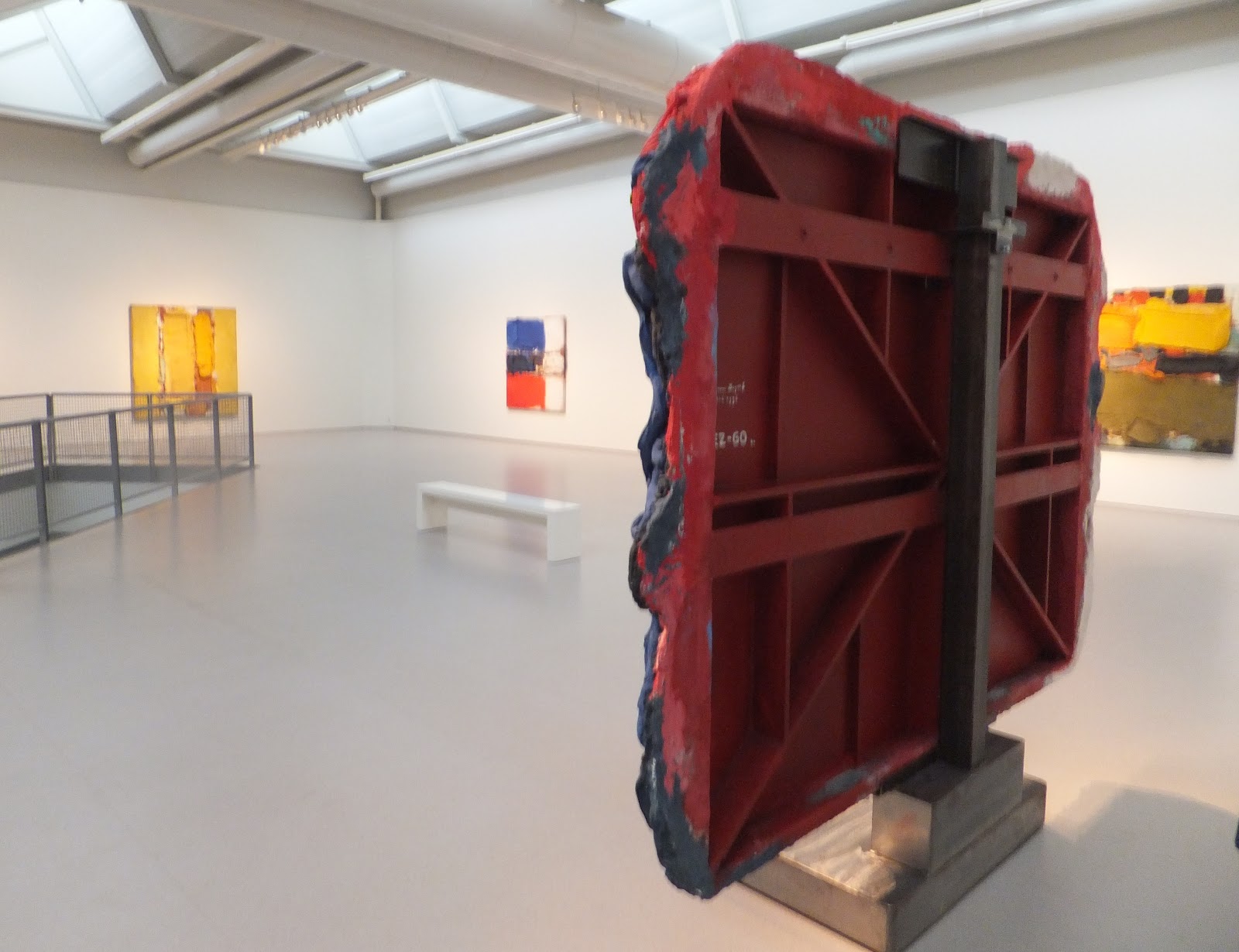
Having said all which my favourite spot was the CoBrA museum for modern art at Amstelveen in the south of the city, an architecturally striking museum currently housing the biggest survey yet expressionistically minimalist paintings of the Dutch-Belgian Bram Bogart (1921-2012), superbly installed around a central light well in a persuasive non-chronological order. Many are shown in the round, so one can appreciate the solidly sculptural construction of metal armature and matchingly-painted wooden box backing which are integral and necessary to Bogart’s biggest paintings, which can weigh over 50 stone.
 |
| Bram Bogart installation view |
CHRISTMAS BOOK
 |
| At the Crosswalk VIII, 2011 |
 |
| Untitled (Crossing the Street II), 1989 |
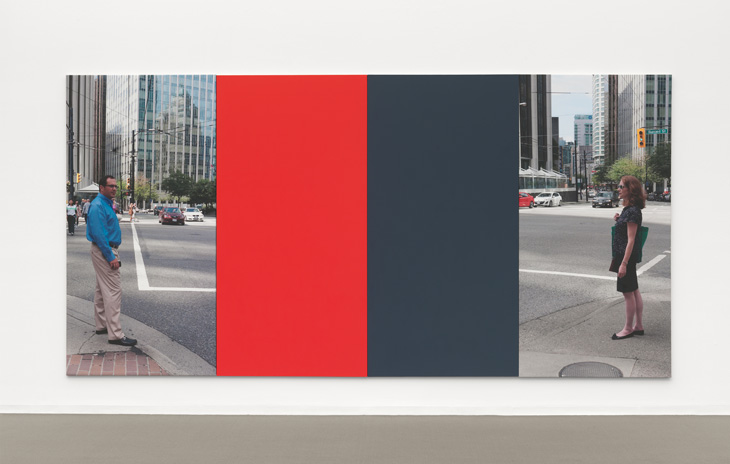
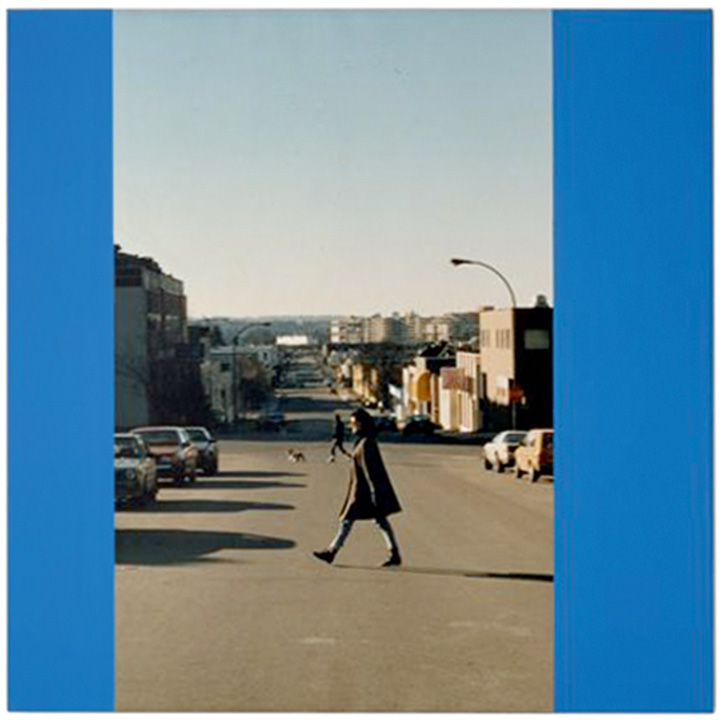
Wallace’s themes come together most persuasively in the series ‘At the Crosswalk’, in which life-sized photographs of figures ready to cross the road in downtown Vancouver (and, later, elsewhere) are imposed over and interrupted by sections of bright monochrome painting. Thus, as Wallace puts it, ‘slabs of reality’ are mounted onto the ‘ideality of the abstract field’ to unify what Wallace cites as the ‘three fundamental technical innovations of twentieth century avant garde art: abstraction (the monochrome being the most radical example); the ready-made (in which any object of the world can be appropriated to function as an aesthetic reference point), and collage (the montage of heterogeneous objects or images into a unified image)’.
 |
| In The Street (The Cologne Series), 1989 |
There is of course a long tradition of seeking out the paradoxical attractions of the banal. What’s distinctive about Wallace is that he sets about this not by uncovering an overlooked aesthetic – as, say, do Ian Breakwell or Fischli & Weiss – but by enriching its theoretical content. That’s enough to make me wish I could get to Vancouver to see the non-touring retrospective which this book documents. Meantime, this excellent production feel as good as a substitute for that could get.